

 100% Canadian Owned and Led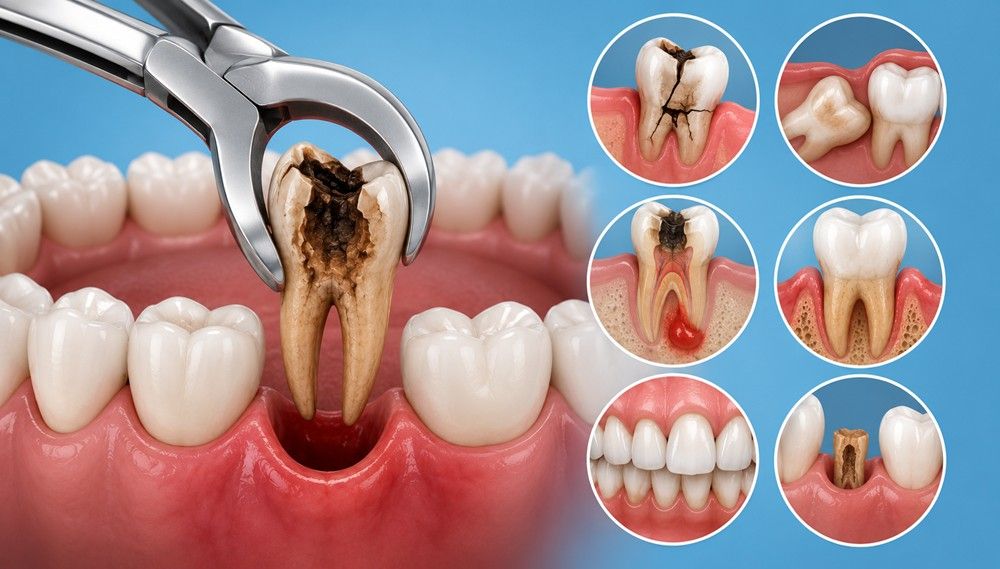
Keeping your natural teeth is always the goal. However, there are times when saving a tooth is not possible or may affect your overall oral health. Knowing when removal is the right option can help you act early—especially if you are considering a tooth extraction near you—and avoid bigger problems later.
This guide explains when tooth extraction is needed, what signs to watch for, and what to expect.
What is Tooth Extraction?
Tooth extraction is the process of removing a tooth from its place in the jaw. It is usually done when a tooth is too damaged, infected, or causing crowding.
A trained dentist near you will first examine your condition and suggest the safest option for your oral health.
When Do You Need a Tooth Extraction?
Tooth removal is not the first choice, but it may be needed in the following situations:
1. Severe Tooth Decay
If a cavity becomes too deep and damages most of the tooth, it may not be repairable with a filling or crown.
- Pain while eating
- Visible holes in the tooth
- Dark or soft areas
When the damage reaches the inner pulp, extraction may be the safest option.
2. Advanced Gum Disease
Gum disease can weaken the tissues and bone that hold your teeth in place.
| Sign | What It Means |
| Loose teeth | Bone support is reduced |
| Bleeding gums | Infection is present |
| Bad breath | Bacteria buildup |
If the tooth becomes unstable, removal may help protect surrounding teeth.
3. Impacted Wisdom Teeth
Wisdom teeth often do not have enough space to grow properly.
- They may grow sideways
- They can stay trapped under the gums
- They may cause swelling or pain
Removing them early can prevent crowding and infection.
4. Tooth Infection
An untreated infection can spread and damage nearby tissues.
Common signs include:
- Severe toothache
- Swelling in the face or gums
- Fever or bad taste in the mouth
If a root canal cannot fix the issue, extraction may be needed.
5. Overcrowding
Sometimes teeth need to be removed to create space, especially before braces.
- Helps align teeth properly
- Improves bite
- Prevents future dental issues
6. Broken or Cracked Tooth
A tooth that is deeply cracked below the gum line may not heal.
- Pain when biting
- Sharp edges
- Risk of infection
If it cannot be restored, removal is often recommended.
What Happens During the Procedure?
Tooth extraction is usually simple and safe.
Here’s what to expect:
- The area is numbed for comfort.
- The tooth is gently loosened.
- It is then removed carefully.
- Gauze is placed to stop bleeding.
For more complex cases, a surgical approach may be used.
How to Care After Tooth Extraction?
Proper care helps in faster healing and prevents problems.
Follow these simple steps:
- Rest for the first 24 hours.
- Do not rinse vigorously or spit.
- Consume soft foods such as yoghurt or soup.
- Do not drink using a straw.
- Keep the site clean.
The healing process can take several days, while complete recovery may take more time.
What are the Alternatives?
Your dentist might think about:
- Fillings to treat minor cavities.
- Crowns to shield weakened teeth.
- Root canal therapy in case of infections.
The tooth extraction will be recommended only when no other alternatives work.
Why Acting Early Matters?
Not attending to oral health problems may result in:
- Pain
- Spread of infection
- Injury to other teeth
- Complex procedures in the future
Early treatment ensures easier and more convenient treatment procedures.
How to Prevent Tooth Extraction?
There are some ways through which you can ensure that you do not require tooth removal.
- Brush twice a day.
- Floss daily.
- Regular visits to the dentist.
- Restricting intake of sugary foods.
- Using a mouthguard while playing sports.
These steps keep your teeth strong and healthy.
Protect Your Smile with Kensington Dental Choice
Taking care of your teeth today can save you from bigger concerns tomorrow. If you are feeling pain, swelling, or discomfort, do not wait for it to get worse. Early care can make a big difference in protecting your smile.
At Kensington Dental Choice, you will get precise direction along with professional help that is personalized for you. If you require assistance, dental care, or safe tooth removal, their staff is here to help you with all aspects of dental care.
Book your visit today and take the first step toward a healthier, more comfortable smile.
FAQs:
How long will my recovery period be after an extraction procedure?
Typically, you’ll start feeling better within a few days, although complete healing could take between one and two weeks.
What foods should I consume after a tooth extraction?
It is advisable to eat soft foods like yogurt, soup, and mashed potatoes during the initial days following an extraction.
When should I seek tooth extraction services nearby?
If you experience intense pain, infection, or a broken tooth that cannot be treated, it is recommended to visit your dentist immediately.
Am I allowed to return to my routine after a tooth extraction?
You can perform your daily tasks after a day of rest following the dental procedure.
